What it is
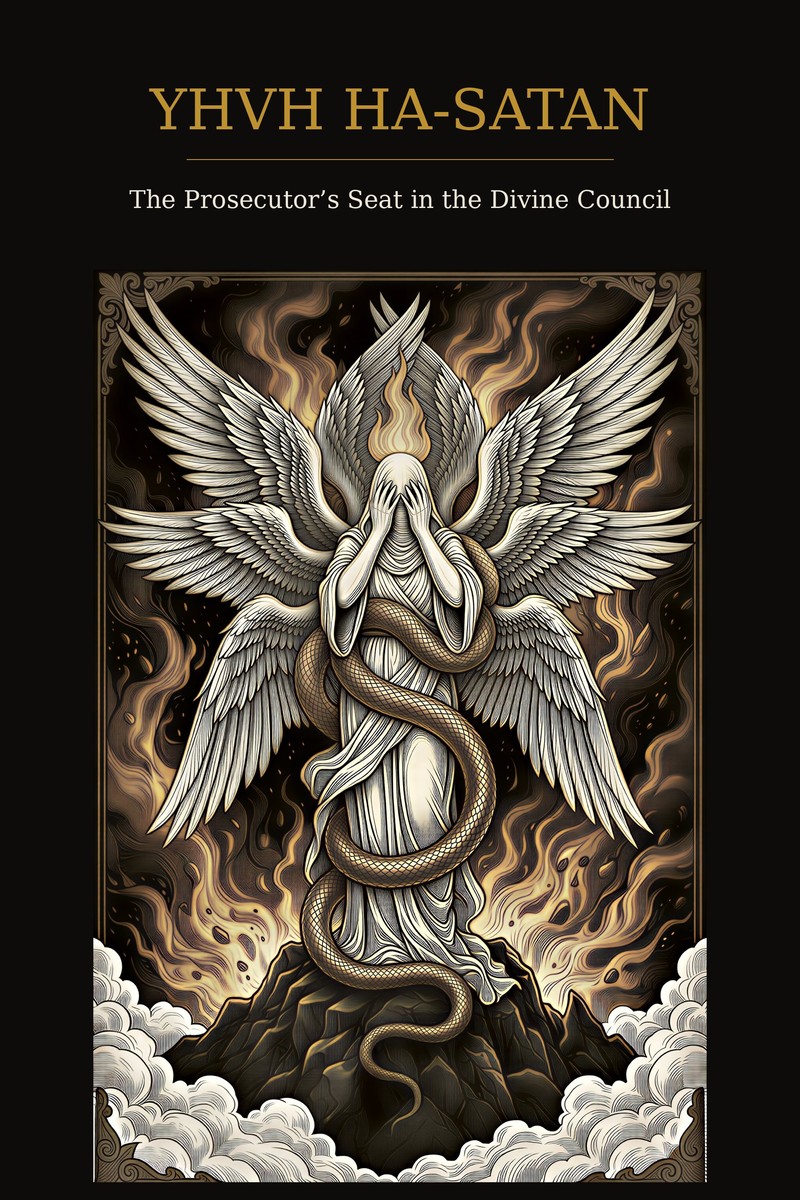
Open the oldest scriptures and the Adversary is not a devil with horns. He is an officer of the court: the figure who rises in the divine council to accuse, to test, to drive the defendant out, who walks the earth to and fro assembling the case. He has a seat and he has a job. This book traces that seat through the text, from the council of Ugarit and Deuteronomy 32 through Job and Daniel, and asks who is sitting in it. The answer is not the cheap shock a reader braces for. It is stranger and more exact: YHWH does not become the Adversary; he occupies the Adversary's seat, discharging the accuser's office from his own throne. The charge falls on the station and its occupant. Station, not descent. A forensic reading of the seat of accusation, and of the second seat, the seat of intercession, that answers it.
Who it is for
If the Book of Job never sat right: This is why. The prosecutor has a desk, and the book finds it.
If you want the apparatus: The Syllogisms and the stemma are the most rigorous pages in the corpus, and they are marked at every step.
If you came from the Backdrop: Part 1, Who Keeps the House, is the short form. This is the long one.
Where it sits in the corpus
The capstone of the corpus: the warden, read forensically. Companion to The Secret Supper. The series' Backdrop, Part 1, is its summary, and the account's rule holds throughout: a figure in a text, never a people.
Not ready for a book? Practice One is free, tonight → · About the author →